
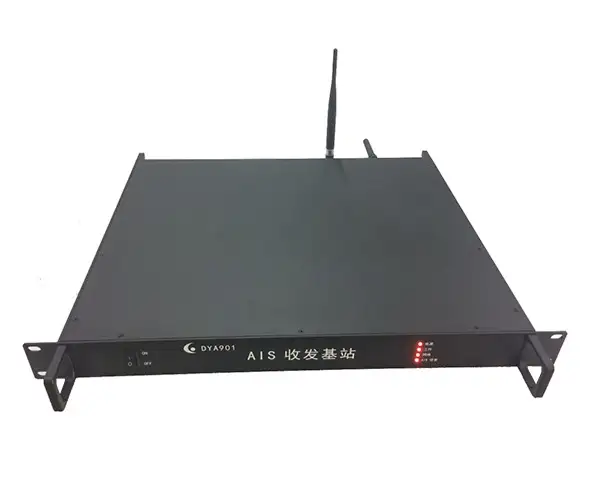
AIS (Automatic Identification System) base stations play a crucial role in the maritime field, capable of collecting and transmitting ship-related information in real-time, providing strong support for maritime navigation safety. AIS base stations are mainly divided into the following categories, each with unique functions.
Shore-based AIS Base Stations
Shore-based AIS base stations are typically installed in coastal ports, along coastlines, and near important maritime traffic hubs. Their functionality is highly comprehensive: they can receive AIS signals from all vessels within their coverage area, which include critical information such as ship identification codes, vessel type, course, speed, and position. These shore-based stations organize and store this information, transmitting it via networks to relevant management authorities such as maritime bureaus and port management agencies. This enables management departments to monitor the dynamics of maritime traffic in real-time, facilitating advance traffic coordination, safety warnings, and effectively preventing maritime traffic congestion and accidents.
Shipborne AIS Base Stations
Shipborne AIS base stations are installed on various types of vessels and serve as essential equipment for information exchange between ships and between ships and shore-based facilities. They not only transmit detailed information about the own vessel, allowing other ships and shore stations to promptly understand its status, but also receive information from other vessels and shore-based AIS stations. Through this information, crew members can anticipate the navigation intentions of nearby vessels, plan routes reasonably, and maintain safe encounter distances, significantly enhancing the safety and efficiency of ship navigation. For example, when two vessels are approaching each other, the shipborne AIS base station can accurately display the other vessel’s course and speed, enabling the crew to adjust their own course and speed in time to avoid collisions.
Portable AIS Base Stations
Portable AIS base stations are characterized by their compactness, light weight, and ease of portability, making them suitable for temporary or specific scenario needs. They can be utilized on small vessels, yachts, or in situations requiring temporary monitoring of vessel dynamics. Portable AIS base stations can quickly establish a small-scale AIS information collection and transmission network, providing users with basic vessel information to help them better understand the surrounding navigation environment. For instance, in areas with water-based activities or small-scale fishing operations, portable AIS base stations can offer real-time vessel position information to participants, ensuring the safety of activities.
Different types of AIS base stations work in coordination to collectively build a comprehensive and efficient maritime vessel information monitoring and management system, providing solid support for the safety and smoothness of maritime navigation.