
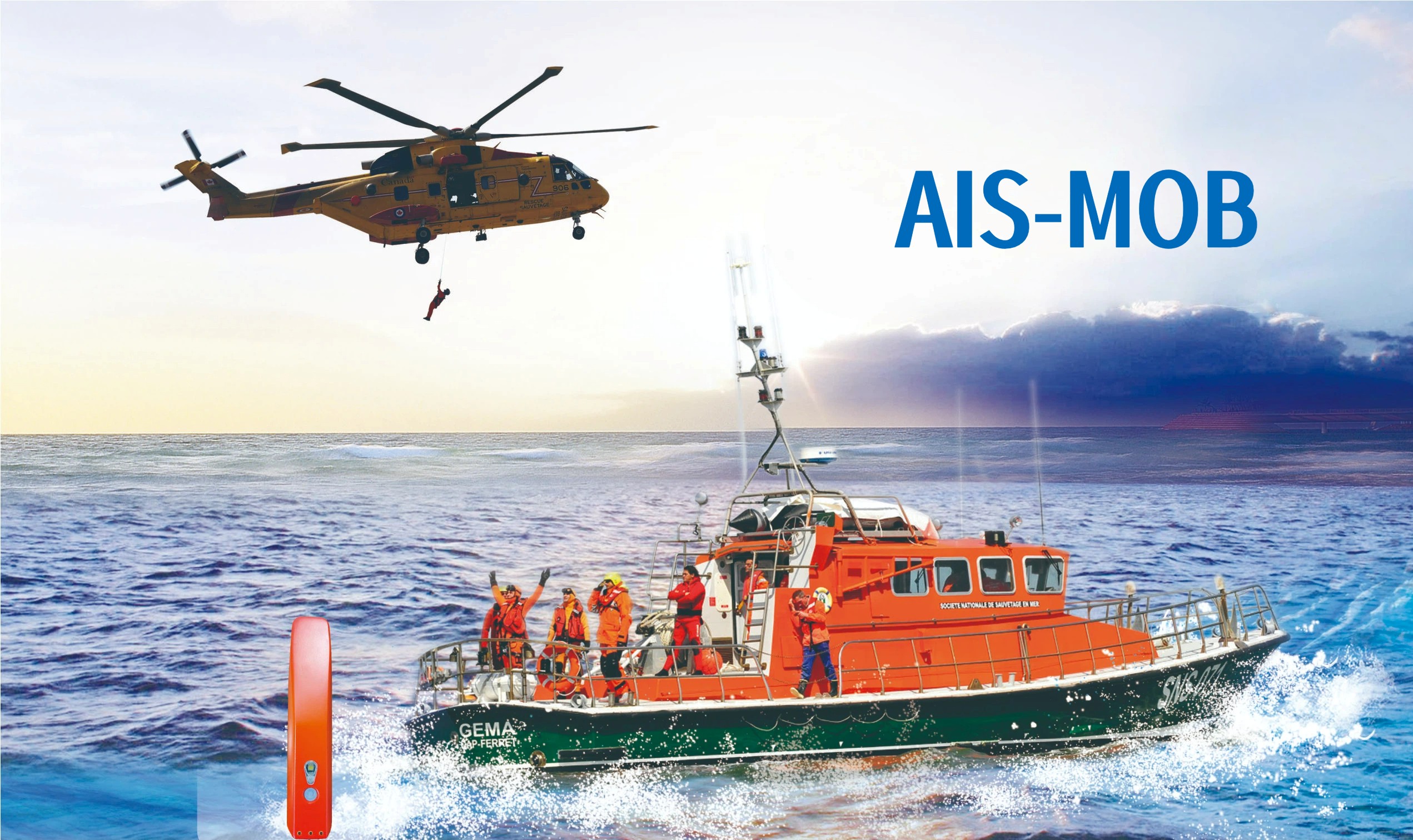
AIS Man Overboard (MOB) equipment is designed to enhance the safety of maritime personnel through emergency rescue capabilities. These devices typically incorporate multiple emergency functions to quickly transmit distress signals and provide positioning information when a person falls overboard, ensuring timely and effective rescue operations. The following are some common emergency functions:
AIS Man Overboard Equipment
Automatic Distress Signal: When the device detects a person overboard, it automatically transmits a distress signal. This signal typically includes the device’s identification information, position coordinates, and timestamp, enabling rescue teams to quickly locate the individual.
GPS Positioning Function: Equipped with a high-precision GPS module, the device can obtain real-time location information of the person overboard and transmit it to rescue centers or vessels. This function is crucial for quickly locating the individual in distress.
Audio-Visual Alarm: The device is usually equipped with an audio-visual alarm system that emits loud alarm sounds and flashing lights upon activation, attracting the attention of nearby personnel and increasing the chances of rescue.
Buoyancy Design: Many MOB devices feature excellent buoyancy design, enabling them to remain afloat in water and preventing the person overboard from sinking. This design provides a certain level of safety for the individual while awaiting rescue.
Integration with AIS System: Some devices can integrate with the vessel’s AIS system, automatically transmitting overboard information to nearby ships, thereby enhancing collaborative rescue efficiency.
Emergency Signal Transmission: The device can send emergency distress signals to nearby vessels or shore-based rescue centers via VHF radio or other communication methods, ensuring rapid dissemination of information.
Durability and Waterproofing: To adapt to the marine environment, the devices are typically constructed from durable and waterproof materials, ensuring reliable operation even under harsh weather conditions.
Portability: The design often prioritizes portability, allowing maritime personnel to carry the device easily and ensuring quick access when needed.
Multifunctionality: Some advanced devices may integrate additional functions such as heart rate monitoring and temperature sensing, providing more comprehensive safety protection.
Training and Drills: Beyond the device’s inherent functions, regular training and drills are essential to ensure effective use of the equipment. Simulating overboard scenarios helps improve personnel’s emergency response capabilities.
In summary, the emergency functions of AIS man overboard equipment aim to maximize the safety of maritime personnel, ensuring rapid and effective rescue operations in case of accidents. With continuous technological advancements, the functionality of these devices is constantly improving, providing more robust protection for maritime safety.